What's the difference between PVC and CPVC pipe fittings?
2025-06-10
While metal pipes were once popular in plumbing, most new plumbing pipes today are plastic due to this material’s corrosion resistance. However, not all plastic pipe fittings are alike, and plumbers now have at least four types of plastic pipes and fittings they can use to make plumbing repairs. Each type of plastic plumbing pipe has its own unique advantages and disadvantages.Learn about the four most popular types of plastic pipe in use today (PVC, CPVC) and the unique advantages and disadvantages of each pipe type by reading the following article.
PVC PIPE & FITTINGS
Polyvinyl chloride pipes and fittings are among the most common plastic plumbing system today. PVC pipes and fittings are affordable and durable and can stay in good condition as long as 70 years without developing rust or corrosion. This type is recyclable when it reaches the end of its lifespan, which makes it an environmentally friendly material.In addition, unlike some plastic pipe fittings types, PVC pipes contain no bisphenol A (BPA), so they can create home water lines with little worry that the water that flows through them will become contaminated with this. These pipes and fittings are also versatile and easy to work with. PVC pipe sections can join together with a variety of pipe fittings, glues, and cements.However, PVC pipes and fittings can become brittle over time when exposed to sunlight or installed in areas of the home that are often extremely hot. This pipe material’s lack of heat resistance makes it a poor choice for use when constructing or replacing hot water lines.
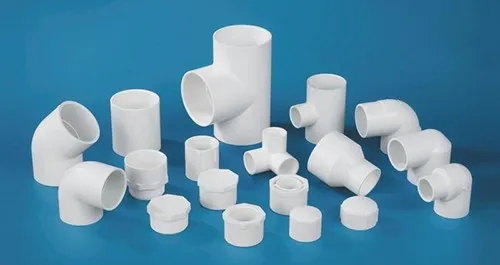
Advantages and disadvantages of PVC pipes
1. Advantages
· Strong corrosion resistance: Can resist corrosion from most acids, alkalis and salts, suitable for chemical, sewage treatment and other environments.
· Light weight and easy installation: PVC pipes have a lower density and are lighter in weight, making them easier to transport and install than metal pipes, reducing construction costs.
· Low fluid resistance: The inner wall is smooth, not easy to scale, and has low water flow resistance, which improves transportation efficiency.
· Good insulation performance: It has excellent electrical insulation and can be used as a protective pipe for wires and cables.
· Strong weather resistance: Can be exposed to sunlight and rain for a long time, not easy to age, and has a long service life.
· Economic price: Compared with metal pipes (such as copper pipes and stainless steel pipes), PVC pipes are inexpensive and cost-effective.
· Good pressure resistance: A properly designed PVC pipe can withstand higher water pressure and is suitable for water supply and drainage systems.
2. Disadvantages
· Poor high temperature resistance: PVC pipes are prone to softening or deformation in high temperature environments (generally over 60°C) and are not suitable for high temperature fluid transportation.
· Low impact resistance: PVC pipes tend to become brittle in low temperature environments and may break when impacted by external forces.
· Environmental impact: Hazardous substances such as hydrogen chloride (HCl) and plasticizers (some types of PVC contain phthalate plasticizers) may be released during the production and disposal of PVC.
· Poor recyclability: The recycling and reuse of PVC materials is more complicated and may contain additives, which limits their recycling.
· Limited connection methods: PVC pipes are usually glued or hot-melt connected, which is slightly inferior in strength and sealing compared to threaded or welded connections of metal pipes.
· Susceptible to UV rays: Long-term exposure to sunlight may cause aging, discoloration or brittleness, so anti-ultraviolet (UV) stabilizers need to be added for outdoor use.
CPVC PIPE & FITTINGS
Chlorinated polyvinyl chloride (CPVC) pipes are PVC pipes with a special chlorinated coating. This chlorinated coating increases the durability of the pipes by increasing their heat resistance. For this reason, CPVC pipes and fittings can repair and create drinking water lines, including hot water lines, without the worry that the pipes will become brittle over time with exposure to high heat. However, CPVC pipes and fittings are slightly more costly than their PVC alternatives, and the lifespan of this pipe type is about 20 to 25 years.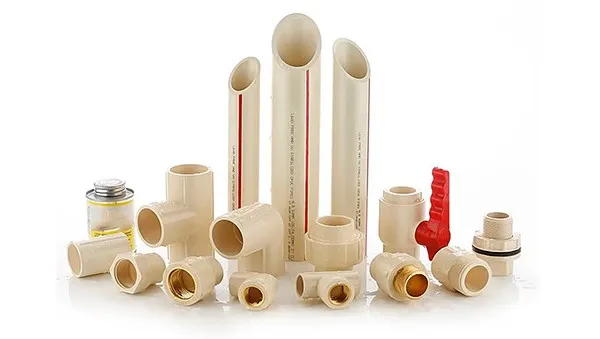
Advantages and disadvantages of CPVC pipes
1. Advantages
· Excellent high temperature resistance: CPVC has a wider temperature resistance range than PVC, and can withstand hot water or chemical fluids at 90℃~110℃, which is suitable for hot water pipes and industrial uses. More suitable for hot water transportation than ordinary PVC (PVC pipes generally do not exceed 60℃).
· Strong corrosion resistance: It can resist the erosion of acids, alkalis, salts and most chemical solvents, and is particularly suitable for the chemical industry, industrial fluid transportation and other fields. In water supply systems and fire protection pipelines, it can prevent chlorine and chemicals in the water from corroding the pipeline.
· Higher mechanical strength: Compared with PVC, CPVC has higher strength and pressure resistance. Under the condition of the same wall thickness, it can withstand greater water pressure and is suitable for high-pressure pipeline systems.· Low thermal expansion coefficient: In an environment with large temperature changes, CPVC pipes have better dimensional stability, are not easy to deform or shrink, and help to increase the service life of the pipeline system.
· Stronger flame retardancy: CPVC itself is not easy to burn, and does not produce a large amount of toxic gases when burning. It is suitable for fire protection systems and environments with high safety requirements.
· Convenient construction: CPVC pipes are similar to PVC and can be connected by solvent bonding or hot melt. The construction method is simple and reliable, and the maintenance cost is low.
2. Disadvantages
· Higher cost: The production process of CPVC is more complicated than PVC, and the price is higher. It is 30%~50% more expensive than PVC pipes, but still cheaper than metal pipes. It is suitable for projects with special requirements (such as high temperature resistance and corrosion resistance), but in general uses (such as ordinary cold water pipes), it may not be as economical as PVC.
· Easy to become brittle in low temperature environment: Below 0℃, the toughness of CPVC pipes will decrease, and it is easy to crack, which is not suitable for long-term use in extremely cold environments.
· Special solvent bonding is required: The connection of CPVC pipes requires the use of special solvent glue or welding technology. Compared with the versatility of PVC, more professional materials and techniques are required during construction.
· Color and appearance restrictions: CPVC pipes are usually light yellow or off-white, unlike PVC, which can be selected in a variety of colors. They may not be very beautiful in some occasions.
· Affected by ultraviolet rays, outdoor use requires protection: CPVC pipes may age if exposed to sunlight for a long time, and need to be coated with anti-ultraviolet coatings or wrapped with insulation materials for protection.
While metal pipes were once popular in plumbing, most new plumbing pipes today are plastic due to this material’s corrosion resistance. However, not all plastic pipe fittings are alike, and plumbers now have at least four types of plastic pipes and fittings they can use to make plumbing repairs. Each type of plastic plumbing pipe has its own unique advantages and disadvantages.Learn about the four most popular types of plastic pipe in use today (PVC, CPVC) and the unique advantages and disadvantages of each pipe type by reading the following article.
PVC PIPE & FITTINGS
Polyvinyl chloride pipes and fittings are among the most common plastic plumbing system today. PVC pipes and fittings are affordable and durable and can stay in good condition as long as 70 years without developing rust or corrosion. This type is recyclable when it reaches the end of its lifespan, which makes it an environmentally friendly material.In addition, unlike some plastic pipe fittings types, PVC pipes contain no bisphenol A (BPA), so they can create home water lines with little worry that the water that flows through them will become contaminated with this. These pipes and fittings are also versatile and easy to work with. PVC pipe sections can join together with a variety of pipe fittings, glues, and cements.However, PVC pipes and fittings can become brittle over time when exposed to sunlight or installed in areas of the home that are often extremely hot. This pipe material’s lack of heat resistance makes it a poor choice for use when constructing or replacing hot water lines.
Advantages and disadvantages of PVC pipes
1. Advantages
· Strong corrosion resistance: Can resist corrosion from most acids, alkalis and salts, suitable for chemical, sewage treatment and other environments.
· Light weight and easy installation: PVC pipes have a lower density and are lighter in weight, making them easier to transport and install than metal pipes, reducing construction costs.
· Low fluid resistance: The inner wall is smooth, not easy to scale, and has low water flow resistance, which improves transportation efficiency.
· Good insulation performance: It has excellent electrical insulation and can be used as a protective pipe for wires and cables.
· Strong weather resistance: Can be exposed to sunlight and rain for a long time, not easy to age, and has a long service life.
· Economic price: Compared with metal pipes (such as copper pipes and stainless steel pipes), PVC pipes are inexpensive and cost-effective.
· Good pressure resistance: A properly designed PVC pipe can withstand higher water pressure and is suitable for water supply and drainage systems.
2. Disadvantages
· Poor high temperature resistance: PVC pipes are prone to softening or deformation in high temperature environments (generally over 60°C) and are not suitable for high temperature fluid transportation.
· Low impact resistance: PVC pipes tend to become brittle in low temperature environments and may break when impacted by external forces.
· Environmental impact: Hazardous substances such as hydrogen chloride (HCl) and plasticizers (some types of PVC contain phthalate plasticizers) may be released during the production and disposal of PVC.
· Poor recyclability: The recycling and reuse of PVC materials is more complicated and may contain additives, which limits their recycling.
· Limited connection methods: PVC pipes are usually glued or hot-melt connected, which is slightly inferior in strength and sealing compared to threaded or welded connections of metal pipes.
· Susceptible to UV rays: Long-term exposure to sunlight may cause aging, discoloration or brittleness, so anti-ultraviolet (UV) stabilizers need to be added for outdoor use.
CPVC PIPE & FITTINGS
Chlorinated polyvinyl chloride (CPVC) pipes are PVC pipes with a special chlorinated coating. This chlorinated coating increases the durability of the pipes by increasing their heat resistance. For this reason, CPVC pipes and fittings can repair and create drinking water lines, including hot water lines, without the worry that the pipes will become brittle over time with exposure to high heat. However, CPVC pipes and fittings are slightly more costly than their PVC alternatives, and the lifespan of this pipe type is about 20 to 25 years.
Advantages and disadvantages of CPVC pipes
1. Advantages
· Excellent high temperature resistance: CPVC has a wider temperature resistance range than PVC, and can withstand hot water or chemical fluids at 90℃~110℃, which is suitable for hot water pipes and industrial uses. More suitable for hot water transportation than ordinary PVC (PVC pipes generally do not exceed 60℃).
· Strong corrosion resistance: It can resist the erosion of acids, alkalis, salts and most chemical solvents, and is particularly suitable for the chemical industry, industrial fluid transportation and other fields. In water supply systems and fire protection pipelines, it can prevent chlorine and chemicals in the water from corroding the pipeline.
· Higher mechanical strength: Compared with PVC, CPVC has higher strength and pressure resistance. Under the condition of the same wall thickness, it can withstand greater water pressure and is suitable for high-pressure pipeline systems.· Low thermal expansion coefficient: In an environment with large temperature changes, CPVC pipes have better dimensional stability, are not easy to deform or shrink, and help to increase the service life of the pipeline system.
· Stronger flame retardancy: CPVC itself is not easy to burn, and does not produce a large amount of toxic gases when burning. It is suitable for fire protection systems and environments with high safety requirements.
· Convenient construction: CPVC pipes are similar to PVC and can be connected by solvent bonding or hot melt. The construction method is simple and reliable, and the maintenance cost is low.
2. Disadvantages
· Higher cost: The production process of CPVC is more complicated than PVC, and the price is higher. It is 30%~50% more expensive than PVC pipes, but still cheaper than metal pipes. It is suitable for projects with special requirements (such as high temperature resistance and corrosion resistance), but in general uses (such as ordinary cold water pipes), it may not be as economical as PVC.
· Easy to become brittle in low temperature environment: Below 0℃, the toughness of CPVC pipes will decrease, and it is easy to crack, which is not suitable for long-term use in extremely cold environments.
· Special solvent bonding is required: The connection of CPVC pipes requires the use of special solvent glue or welding technology. Compared with the versatility of PVC, more professional materials and techniques are required during construction.
· Color and appearance restrictions: CPVC pipes are usually light yellow or off-white, unlike PVC, which can be selected in a variety of colors. They may not be very beautiful in some occasions.
· Affected by ultraviolet rays, outdoor use requires protection: CPVC pipes may age if exposed to sunlight for a long time, and need to be coated with anti-ultraviolet coatings or wrapped with insulation materials for protection.